
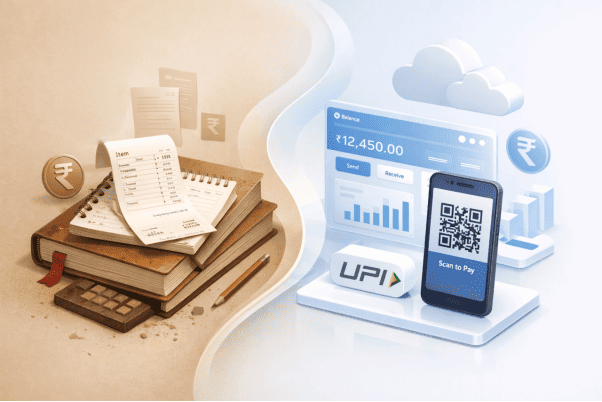
Imagine a 50-year-old school in Lucknow. The bookkeeper still had boxes of receipt books tucked in cupboards, handwritten entries lining dusty ledgers, and a year-end reconciliation process that felt like a marathon.
Then in 2022, something as simple as a parent scanning a QR code to pay fees changed everything. That moment marked the beginning of a long arc of transformation.
Fast-forward to 2026: BBPS (Bharat Bill Payment System) and digital payment portals are no longer optional—they are expected. Schools, colleges, and coaching centres across India are integrating digital fee systems as part of their core administrative workflows, making digital fee collection for educational institutions the new standard of efficiency and transparency.
Government policy has actively encouraged this shift, with the Education Ministry urging states and school bodies like NCERT, CBSE, KVS, and NVS to adopt UPI and other digital payment systems for fee collections – highlighting convenience, security, and financial literacy benefits for parents and administrators alike.
Shift from Manual to Digital Workflows
Earlier, fee collection involved:
Today, digital portals automatically manage all of the above as part of extended workflows. With BBPS, UPI, net banking, and other digital options:
This shift mirrors broader digital adoption trends in India, where digital payments accounted for 99.8% of total transaction volume in the first half of 2025 according to RBI data—showing how deeply digital rails have penetrated everyday financial interactions.
Impact on Administrative Workload
Digital fee collection doesn’t just improve convenience—it changes how a school operates:
Administrators spend far less time chasing payments, and more time on strategic tasks like parent outreach, student engagement, or academic planning.
Insight: The Psychology of Digital Trust
When parents see transparent, instant receipts and dashboards showing their total dues, payments, and history, it builds confidence—not just in the payment process, but in the institution itself.
In Tier-2 and Tier-3 towns, BBPS-based systems are also making fee collection more accountable and accessible. Parents aren’t required to visit campus in person; they can pay from home, with clear digital records that eliminate disputes and reduce friction. Government encouragement around UPI and digital fee systems has further accelerated this change, linking schools to India’s broader Digital India vision.
Why GenixPay Fits for Small to Large Institutions
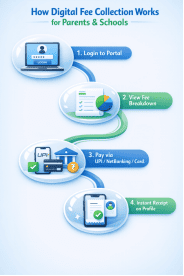
Whether a small neighbourhood school or a large college chain, GenixPay’s digital fee collection solution scales to fit operational complexity:
With secure, compliant payment rails and flexible integration options (BBPS, UPI, wallets, cards), GenixPay offers a comprehensive backend that adapts to institutional needs without overhauling existing systems.
Final Thoughts
Today, digital fee collection isn’t a nice-to-have. It’s infrastructure. It supports transparency, trust, operational efficiency, and modern financial expectations among parents and institutions alike.
“Digital fee collection is no longer a choice. It’s infrastructure.”