

The Traditional Problem: Manual Payments and Their Limitations
Think back a few years – paying school fees meant long queues, dealing with cash or cheques, and paper receipts that got lost more often than we’d like to admit. Parents had to take time off work, and schools had to deploy staff to manually collect, reconcile, and deposit funds. The process was slow, error-prone, and insecure.
For schools, the burden didn’t end at collection. Managing ledgers, generating fee receipts, and following up on pending dues were all done manually, often leading to operational chaos, especially during fee submission deadlines.
What’s Changed: The Rise of Digital Infrastructure in India
India has rapidly transformed into one of the world’s leading digital economies. With the Digital India initiative, Aadhaar-linked bank accounts, and UPI revolutionizing even the smallest of payments, fee payment systems are naturally evolving.
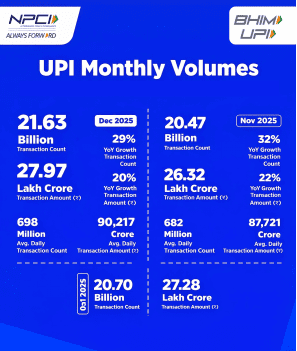
In fact, India’s digital payments ecosystem continued its rapid growth in 2025, with the Unified Payments Interface (UPI) recording over 21.6 billion transactions worth nearly ₹28 lakh crore in December 2025 (Source: NPCI) – marking the highest monthly transaction value since UPI was launched and underscoring the deep penetration of digital payments across the country.
What’s Changed: The Rise of Digital Infrastructure in India
India has rapidly transformed into one of the world’s leading digital economies. With the Digital India initiative, Aadhaar-linked bank accounts, and UPI revolutionizing even the smallest of payments, fee payment systems are naturally evolving.
In fact, India’s digital payments ecosystem continued its rapid growth in 2025, with the Unified Payments Interface (UPI) recording over 21.6 billion transactions worth nearly ₹28 lakh crore in December 2025 (Source: NPCI) – marking the highest monthly transaction value since UPI was launched and underscoring the deep penetration of digital payments across the country.
Now that even roadside vendors accept QR codes, why should schools still rely on age-old payment methods?
Benefits for Parents: Convenience, Transparency & Time-Saving
Modern parents are busy professionals who appreciate convenience and real-time visibility. With digital school fee systems, they can:
It’s no surprise that over 90% of Indian parents are in favour of digital payment systems in schools, according to industry surveys conducted by edtech platforms in India.
"In a digital economy, education should not be left behind. Parents deserve the same ease as online shopping when paying for their child's education."
Benefits for Schools: Efficiency, Accuracy & Growth
From an administrative point of view, going digital transforms a school’s fee management into a streamlined, scalable and secure process. Schools can:
Most importantly, digital fee collection improves fee recovery rates, lowers defaulters, and gives real-time visibility into finances.
Smart schools don’t just use smartboards in class – they also run smart offices that collect fees the smart way.
Compliance and Data Security
School payments require a platform that’s not just fast, but also secure and compliant with Indian data regulations. The right digital fee gateway will:
A Sign of a Forward-Looking Institution
Offering digital payment options sends a strong signal – your school is modern, transparent, and cares about the parent experience. It boosts the institution’s brand and appeal, especially in urban and Tier-2 cities where expectations around tech-first operations are growing.
Government Push + Parental Demand = Inevitable Adoption
The Digital India push, new NEP (National Education Policy) emphasis on tech-led institutions, and rising parent expectations are all coming together to make digital school fee systems the new norm.
These are the reasons why Indian schools are switching to Digital Fee Collection Systems