
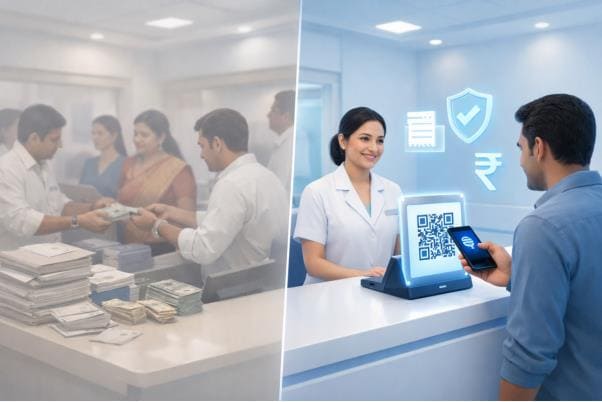
Walk into a hospital billing area in 2019, and you’d likely see long queues, multiple counters and patients holding cash, cards, or files of documents. Fast forward to 2026, and the same experience is quietly transforming. A quick scan, a payment link or a tap on a phone – and the process is done.
Across India, hospitals are steadily moving towards fully digital payment systems. And this shift isn’t just about convenience – it’s about efficiency, trust and delivering a better patient experience.
The Big Shift: India’s Digital Payment Explosion
India’s payment ecosystem has undergone a massive transformation over the past few years. With UPI becoming the backbone of everyday transactions, digital payments are now the default, not the alternative.
In 2025, UPI processed over 20 billion transactions monthly, with transaction values crossing ₹25–28 lakh crore, reflecting how deeply digital payments have penetrated daily life. This behavioural shift is now directly influencing how patients expect to pay for healthcare services.
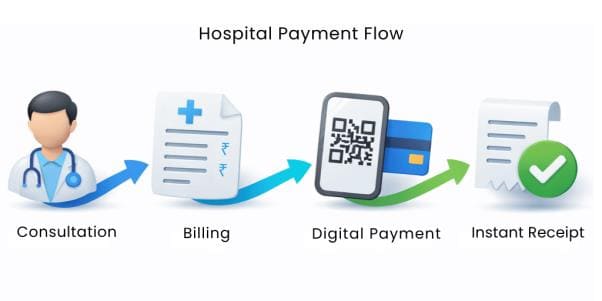
Hospitals are responding accordingly:
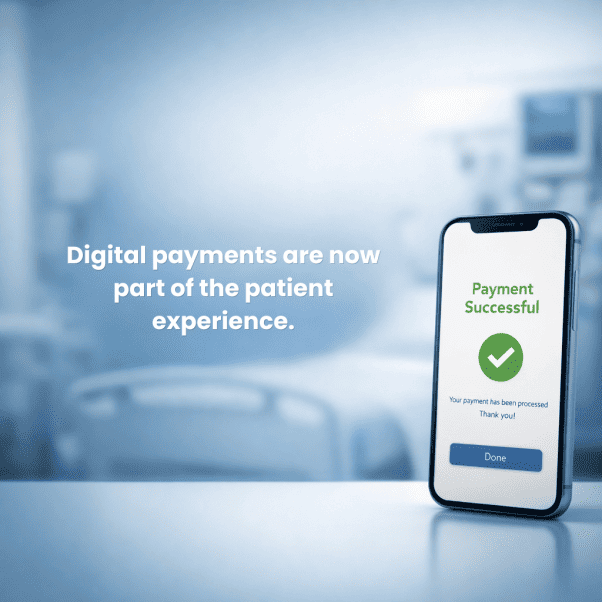
Digital payments are no longer just a financial tool – they’re part of the healthcare experience.
Challenges with Traditional Hospital Billing
Despite medical advancements, many hospitals still operate on outdated billing systems. This creates friction at critical moments, especially during patient discharge.
Common challenges include:
In high-pressure environments like hospitals, even small delays can impact patient satisfaction significantly.
“In healthcare, every minute matters, even at the billing counter.”
What Fully Digital Payment Systems Look Like
A digitally enabled hospital doesn’t just add a QR code – it rethinks the entire payment flow.
Modern systems include:
The result? A seamless journey where billing becomes almost invisible to the patient.
Real-World Impact: A Mid-Sized Hospital’s Transformation
Consider a 150-bed hospital in a Tier-2 city that digitised its payment system in 2024.
Before:
After adopting digital payments:
More importantly, patient feedback improved – not because of new medical services, but because the overall experience became smoother.
Compliance, Security & Trust
Healthcare payments involve sensitive financial and personal data. That makes security and compliance non-negotiable.
A robust digital payment system delivers:
For hospitals, this isn’t just about avoiding risk – it’s about building trust with patients and partners.
Where GenixPay Fits In
GenixPay is designed to support the evolving needs of India’s healthcare ecosystem.
With GenixPay, hospitals can:
Whether it’s a multi-speciality hospital, a diagnostic chain or a standalone clinic, GenixPay provides the infrastructure to make payments faster, safer and smarter.
Final Thoughts
Healthcare in India is becoming more patient-centric, more digital and more connected. Payments are a crucial part of that transformation.
Hospitals that adopt digital payment systems aren’t just improving collections – they’re improving the entire patient journey.
“In modern healthcare, treatment may heal – but experience builds trust. And payments are a big part of that experience.”